
 Business License

Ice Maker Maintenance Checklist for Commercial Buyers
Last Tuesday, the kitchen manager at a mid-sized catering operation in Dusseldorf opened the ice maker bin and found something she did not expect: the ice had a faint off-taste, output was down by roughly 30%, and the machine had been cycling longer than usual. The staff had been running the unit for nearly nine months without a documented maintenance routine. What started as a skipped cleaning cycle turned into a two-day service disruption during the busiest week of the quarter.
You may already know that commercial ice makers need regular attention. The question is whether your current maintenance schedule is complete enough to catch the issues that lead to reduced output, off-specification ice, and unplanned downtime. This article provides a structured ice maker maintenance checklist organized by frequency, explains what each task addresses, and identifies the information to request before scheduling service or ordering replacement parts.
Why a Structured Maintenance Routine Matters
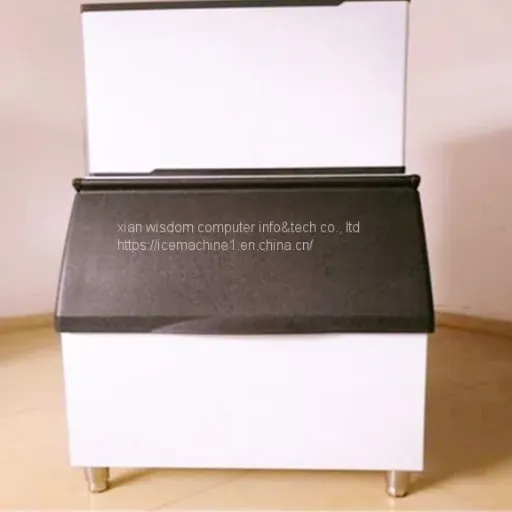
A commercial ice maker works under continuous load in a wet, cold environment. Water carries minerals that form scale. Ambient air carries dust and grease that coat condenser surfaces. Door seals and gaskets wear with repeated use. Each of these conditions, left unchecked, affects ice quality and equipment reliability.
Without a documented schedule, three common problems tend to appear:
Scale buildup on evaporator surfaces and water lines, which reduces heat transfer and slows ice production.
Restricted airflow across the condenser coil, which increases head pressure, raises energy draw, and shortens compressor life.
Microbial growth in water pathways and storage bins, which can affect ice taste, odor, and hygiene compliance.
A maintenance checklist does not need to be complex. It needs to be consistent, model-specific, and recorded so that operating trends become visible before they become repairs.
Verification required: Maintenance intervals and procedures vary by model, installation environment, water quality, and usage volume. Confirm the current manufacturer documentation for the specific ice maker model before adopting any schedule.
Daily Ice Maker Maintenance Checks
A daily ice maker maintenance checklist helps catch issues that develop quickly in a commercial setting. The goal is a visual and sensory check of the ice maker's output and the immediate environment.
Inspect Ice Quality at the Start of Each Shift
Open the bin and examine the ice. Look for:
Inconsistent shape or size: Ice should match the expected form for the machine type. Cloudy, misshapen, or partially formed ice can indicate water-distribution problems, a worn pump, or scale on the evaporator.
Off-odors or discoloration: Smell the ice directly. Any noticeable odor suggests contamination, a dirty bin, or a water-quality issue.
Bin-level check: If output is noticeably below the expected volume for the same runtime, record it. A gradual drop in daily production often points to a developing maintenance issue rather than a sudden failure.
Verify Water Supply and Drainage
Confirm that water is flowing to the unit without restriction. Check around the base of the ice maker and the bin for standing water, which can indicate a blocked drain, a loose fitting, or a leak in the water line. A small leak left unaddressed can cause floor damage and create a slip hazard, and it may also introduce contaminants into the bin area.
Confirm Proper Operation
Listen for any change in the normal operating sound. A compressor that short-cycles, a pump that runs dry, or a fan that rattles is a signal to investigate. Note the behavior in the daily log so a maintenance technician can use the observation during the next scheduled service.
Weekly and Bi-Weekly Maintenance Tasks
Weekly checks go beyond what the eye catches in a morning walk-through. This part of the ice maker maintenance checklist addresses the surfaces, filters, and conditions that affect long-term ice quality.
Clean and Sanitize the Ice Bin
Even when the ice itself is clean, a bin that goes weeks without cleaning can harbor mold, yeast, or bacteria. The procedure generally involves:
Removing all ice from the bin.
Using a food-grade cleaner and sanitizer approved for the ice maker model.
Wiping all interior bin surfaces, corners, and the door or lid gasket.
Rinsing thoroughly per the manufacturer's instructions and allowing the bin to dry.
Confirm the specific cleaning and sanitizing agents, concentrations, contact times, and rinse procedures with the model-specific documentation. Using an unapproved chemical can corrode components or leave residues that affect ice safety.
Inspect and Clean Air Filters
Many commercial ice makers have an air intake filter, particularly air-cooled models. A clogged filter forces the compressor to work harder and reduces cooling efficiency. Remove the filter, rinse or replace it according to the manufacturer's recommendation, and record the date.
Check the Water Filtration System
If the ice maker uses an inline water filter, confirm that it is within its rated service life. A filter that has exceeded its capacity cannot control scale, taste, or sediment effectively. The maintenance log should note the filter installation date so replacement is scheduled before the filter loses effectiveness.
Verification required: Water-filter replacement intervals depend on incoming water quality, ice maker usage, and the filter model. Request the current filter specification sheet for the model and operating conditions.
Consider the case of a small seafood distributor in Valencia. The maintenance technician noticed that the ice maker's output had been declining for roughly four weeks. The logbook showed no filter change in over a year. After replacing the blocked filter and descaling the water system, daily output returned to the documented specification. The fix was straightforward, but without the before-and-after production records, the team would not have been able to confirm that the filter was the root cause.
Wipe External Surfaces and Check Door Seals
Clean the exterior stainless steel or panel surfaces with a non-abrasive cloth and a mild cleaner. Inspect bin door seals and access-panel gaskets for cracks or gaps. A poor seal lets warm ambient air into the bin, which accelerates ice melt and increases the cooling load.
Monthly Ice Maker Deep-Cleaning Procedure
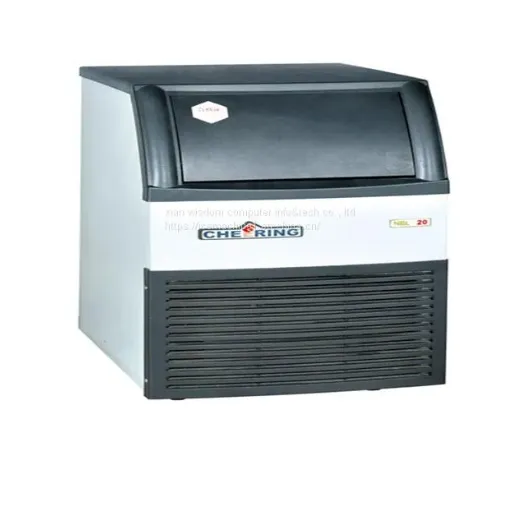
Monthly maintenance is the most thorough routine. It involves cleaning the internal water-contact surfaces and the condenser, and it requires more preparation and a longer service window.
Clean the Evaporator and Water System
The evaporator is the surface where ice forms. Over time, mineral scale builds up and reduces thermal transfer. The cleaning process typically requires:
Removing ice from the evaporator and bin.
Draining the water reservoir according to the manufacturer's procedure.
Applying an approved descaling solution at the recommended concentration.
Running the cleaning cycle as specified in the model documentation.
Flushing the system with clean water to remove all chemical residue.
Running a sanitizing cycle if the manufacturer specifies one.
Document the cleaning agent, batch number, concentration, contact time, and rinse-method for each service. This record supports food-safety compliance and helps diagnose future performance issues.
Clean the Condenser Coil
A fouled condenser is one of the most common causes of reduced ice-maker capacity. For air-cooled models:
Disconnect power and confirm the machine is safely isolated.
Remove the front panel or access cover.
Use a soft brush or a vacuum with a brush attachment to remove surface dust.
Use a fin comb to straighten bent fins if needed.
For heavily fouled coils, use a commercial coil cleaner approved for the evaporator and condenser materials.
For water-cooled condensers, descale the water circuit according to the manufacturer's procedure. The frequency depends on water hardness and usage hours.
Inspect Electrical Connections and Components
With power disconnected and lockout procedures in place, visually inspect accessible wiring, terminals, and control-board connections. Look for:
Signs of overheating, such as discolored insulation or burn marks.
Loose or corroded terminals.
Water intrusion near electrical components.
Verification required: Electrical inspection and service should be performed by a qualified technician. Confirm the model-specific wiring diagram, safety procedures, and component specifications before any electrical work.
Verify Temperature and Ice-Bridge Thickness
The ice-bridge thickness setting determines how long the freeze cycle runs before harvest. A setting that drifts can reduce output or cause the machine to freeze up. Confirm the bridge-thickness specification for the model and adjust according to the documented procedure if the ice does not match the expected form.
Water System and Filtration Maintenance
Water quality is a primary variable in ice maker reliability. Two installations of the same model can have very different maintenance needs because of differences in incoming water.
Understanding Water Quality Variables
Three factors affect maintenance frequency:
Hardness: High calcium and magnesium levels accelerate scale deposition on evaporators, pumps, and water lines.
Total dissolved solids (TDS): High TDS can contribute to cloudy ice and off-flavors.
Chlorine and chloramines: Municipal water treatment chemicals can corrode certain materials over time.
If water quality data is not available for the installation site, request a water analysis before selecting the filtration and descaling schedule.
Filtration System Selection
The filtration approach should match the water conditions and the ice maker's requirements:
Sediment filters remove suspended particles that can clog valves and nozzles.
Carbon filters reduce chlorine, taste, and odor compounds but do not address hardness.
Scale-inhibition or phosphate filters reduce scale but must be sized for the water usage rate.
Reverse osmosis (RO) systems remove the broadest range of dissolved solids but reduce water pressure and require storage, pump, and drain provisions.
Confirm the filtration configuration and replacement schedule with the ice maker manufacturer's water-quality recommendations and the filter supplier's performance data.
Maintaining the Water Reservoir and Pump
The water reservoir and recirculating pump move water across the evaporator during each freeze cycle. In a poorly maintained system, biofilm can form in the reservoir, and pump impellers can wear or clog. During monthly or quarterly service, drain and inspect the reservoir, clean the pump inlet screen, and verify that the pump is delivering the specified flow.
Condenser and Ventilation Upkeep
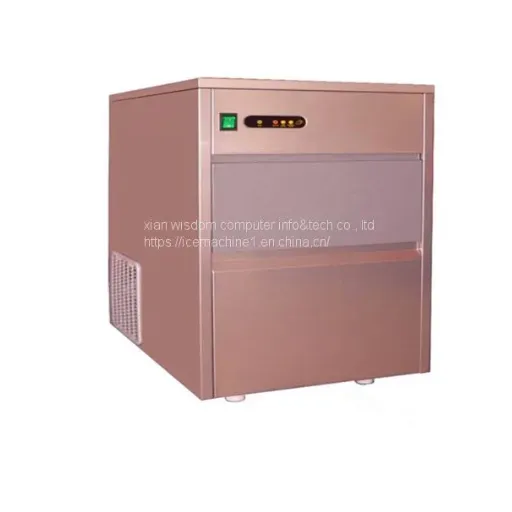
The condenser is where the ice maker rejects heat. If the condenser cannot transfer heat effectively, capacity falls and energy use rises.
Air-Cooled Condenser Maintenance
For air-cooled ice makers, the installation environment drives maintenance frequency. Units in kitchens with airborne grease or in dusty manufacturing areas may need condenser cleaning every two to four weeks, not just monthly. Confirm the required clearance around the unit, generally stated in the installation documentation, and verify that nothing has been stacked against or near the vents since installation.
A facility team at a cold-storage warehouse in Rotterdam found that their ice maker's production had dropped by roughly 15% over six weeks. The maintenance log showed that the condenser had been cleaned on schedule, but a site walk revealed that a pallet rack had been moved closer to the unit during a warehouse re-organization, blocking the discharge-air path. Once the clearance was restored to the documented minimum distance, output recovered. The lesson: condenser maintenance includes both cleaning the coil and checking the installation environment.
Water-Cooled Condenser Maintenance
Water-cooled condensers use a regulated water flow to remove heat. They are quieter than air-cooled units and can operate in warmer ambient conditions, but they require:
Periodic descaling of the condenser water circuit.
Confirmation that water-regulating valves are operating within specification.
Verification that the water supply and drain connections are secure and compliant with local plumbing requirements.
Ventilation and Ambient Conditions
Confirm that the room temperature stays within the range stated in the installation documentation. An ice maker placed in an unconditioned space may experience wide temperature swings that affect cycle times and output. If ambient conditions have changed since installation, request updated guidance on whether the model remains suitable for the operating environment.
When to Request Technical Support or Documentation
Not every issue can be resolved with a checklist. Certain conditions require model-specific troubleshooting information, a qualified technician, or a review of warranty and support terms.
Signs That a Service Call Is Needed
A sudden drop in ice production, more than 10% in a week, with no obvious cause such as a filter or condenser issue.
Repeated error codes or unusual shutdown patterns recorded in the control board.
Water leaks that cannot be traced to a loose fitting or visible seal.
Electrical symptoms such as a tripped breaker, buzzing, or intermittent operation.
Ice that consistently fails to release from the evaporator during the harvest cycle.
When you contact a technician, have the model number, serial number, installation date, recent maintenance records, and a description of the operating conditions ready. This information helps the technician bring the right parts and reference the correct service documentation.
Requesting Current Model Documentation
Maintenance checklists, cleaning agents, replacement-part numbers, and service procedures are model-specific. Before ordering parts or scheduling service, request:
The current maintenance and service manual for the model.
The recommended cleaning and sanitizing chemicals with concentrations, contact times, and material compatibility.
The replacement schedule for consumable parts such as water filters, air filters, pump seals, and door gaskets.
The applicable warranty terms and authorized service contact information.
The company states that after-sales support is a key part of its service approach. Request written information covering manuals, parts, warranty, and the applicable support process for the selected ice maker model.
Preparing an Ice Maker Maintenance Record
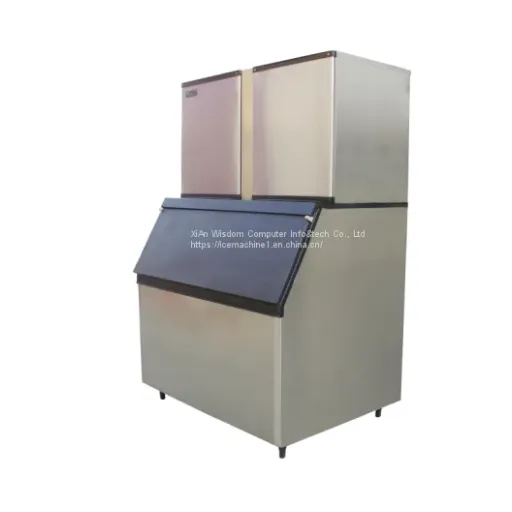
A maintenance record turns a checklist into a tool for planning, budgeting, and compliance. It should capture enough detail to show trends over time.
What a Useful Maintenance Record Includes
| Field | Details to Record |
|---|---|
| Date and time | Include the shift or service window. |
| Tasks performed | Note each procedure, including cleaner/sanitizer used and concentration. |
| Observations | Record ice quality, output, sound, and any visual changes since the last check. |
| Parts replaced | Include the part number, supplier, and installation date. |
| Water-filter status | Log the filter replacement date and the next scheduled change. |
| Technician notes | Record any adjustments, error codes, or recommendations. |
| Next scheduled service | Set a date and the scope of planned work. |
Why Records Matter for Procurement
For buyers evaluating an ice maker purchase, maintenance requirements are part of the total operating cost. A model that needs condenser cleaning every two weeks in a specific environment represents a different maintenance commitment than one that can run four weeks between services. Maintenance records from similar installations, when available, help set realistic expectations.
Aligning Maintenance with a Preventive Schedule
Once records are kept for several months, patterns emerge. Scale builds at a predictable rate. Filters reach capacity on a known schedule. Condenser fouling tracks with seasonal dust or kitchen activity. Use the data to set a preventive maintenance calendar that addresses issues before they affect production.
Request company-provided maintenance guidance for the specific model to compare the recommended schedule with your recorded data. If the observed maintenance intervals differ significantly from the recommendations, investigate the installation conditions, water quality, or usage pattern.
Conclusion
A commercial ice maker maintenance checklist reduces the risk of unexpected downtime, helps maintain consistent ice quality, and provides the documentation needed for food-safety compliance and service planning. The core tasks, daily inspection of ice quality and environment, weekly bin and filter cleaning, monthly deep-cleaning of the evaporator and condenser, and consistent record-keeping, apply broadly, but the specific procedures, chemicals, parts, and intervals depend on the model, installation conditions, and water quality.
Three key points to take forward:
Match the checklist to the model. Use the current manufacturer documentation, not a generic schedule, to set tasks and frequencies.
Record everything. A maintenance log that captures dates, observations, parts, and chemicals helps identify developing issues before they cause a shutdown.
Verify before ordering. Confirm the cleaning agents, replacement parts, filter specifications, and service terms that apply to the specific ice maker model and installation.
Discuss your ice maker application and maintenance requirements with the company to request model-specific documentation, confirm recommended service procedures, and prepare a maintenance plan suited to your operating conditions.
Recently Posted
-
Centrifugal blower selection: how to choose the right model for your application
August 12, 2026Most centrifugal blower selection mistakes are not made inside the machine. They are made before the enquiry goes out, when a buye Read More
 -
How to Select a Pump for Your Application: A Buyer's Guide
August 12, 2026In March 2026, a maintenance supervisor at a beverage plant in Monterrey filed a one-line request: "Get us a new water pump.& Read More
 -
Industrial Pump Selection: A Practical Guide for Buyers
August 12, 2026A plant engineer at a beverage bottling facility in Rotterdam ordered three pumps in March 2025, choosing them by flow rate and pr Read More
 -
How to choose water treatment equipment: a buyer's selection guide
August 12, 2026What would a failed water-quality audit cost your operation? For a food processor, a beverage plant, or a commercial facility, the Read More

Contact Us
Recommended Products
-
 Large Capacity Ceiling Mounted Space Saving Indoor Pool DehumidifierNegotiableMOQ: 1 Piece
 -
Commercial Home Use Bathroom Dehumidification Swimming Pool Ceiling Mounted Mini DehumidifierNegotiableMOQ: 1 Piece
-
Greenhouse Grow Room Industrial Ceiling Mounted Duct Indoor Pool DehumidifierNegotiableMOQ: 1 Piece
-
Duokai OEM Indoor Dehumidifier Portable Swimming Pool Dehumidifier in Stock With CENegotiableMOQ: 1 Piece
-
High Quality Low Voltage ODM & OEM PLC Distribution CabinetNegotiableMOQ: 1 Set
-
Saladin Type Malt Production LineNegotiableMOQ: 1 Set
-
Seawater Desalination SystemUS$ 2000 - 1000000MOQ: 1 Set
-
High Speed Synthetic Lane Bowling Ball ReturnUS$ 50 - 2000MOQ: 10 Pieces
-
Reliable Automatic Six Axis Industrial Packing Robot With Self Diagnostic SystemNegotiableMOQ: 1 Piece
-
Multi-Travel Radius Six Axis Servo Robot for Custom Automation WorkstationNegotiableMOQ: 1 Piece

-
Labor Saving 6 Axis Industrial Robot Boost Workshop Production EfficiencyNegotiableMOQ: 1 Piece
-
Factory Direct Wholesale Carton Palletizer Packing Line Robot for MilkNegotiableMOQ: 1 Piece
-
Six-Axis Industrial Robotic Arm for Handling Welding Loading UnloadingNegotiableMOQ: 1 Piece
-
High-Automation High-Precision Six-Axis Metal Laser Industrial Welding RobotNegotiableMOQ: 1 Piece
-
Six-Axis Automatic Industrial Welding Robot Arm With Competitive PriceNegotiableMOQ: 1 Piece