
 Business License

Diesel Generator Maintenance Guide: What to Check and When
A diesel generator set fails when it is needed most, and rarely by accident. The standby set in the engine room has seen no service plan for eight months. Batteries sit flat, the fuel has aged, and no one has started the unit since the last site visit.
That's a common picture, not a rare one.
Most diesel generator breakdowns trace to neglected routine care, not a sudden mechanical fault. When the grid drops, a set that has not been exercised, tested, or logged is a gamble. This diesel generator maintenance guide explains what to check, how often, and which records to keep so a set stays ready for the moment it is called on.
By the end, you'll have a practical maintenance checklist, a schedule you can adapt to your site, and a clear list of documentation to request from your supplier. Confirm the intervals in this guide against the manufacturer's manual and any standard that applies to your site, because duty and environment change what a set needs.
If your site already has a set in service, use the checklist in this guide to plan the next service cycle and request the current documentation for the model.
Why diesel generator maintenance matters
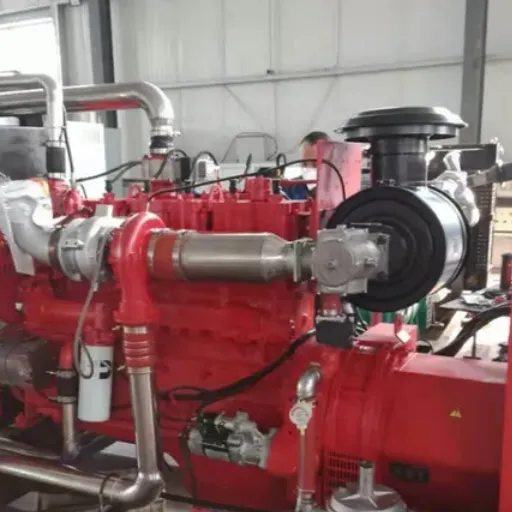
A diesel generator set, often called a genset, combines a diesel engine, an alternator, a control system, a fuel supply, and the supporting connections. Each part ages differently, and the weakest link decides whether the set starts.
Maintenance matters for four reasons:
Reliability: a set that must run during an outage has no second chance to fail and restart.
Cost: a small check often catches a problem that becomes an expensive repair later.
Safety: fuel, exhaust, coolant, and electrical systems all carry real hazards when left unchecked.
Documentation: many sites must show testing and service records to satisfy internal policy, insurers, or local standards.
Consider a site manager who inherited a standby set with no logbook. No one knew how many hours it had run, when the oil was last changed, or whether the batteries could hold a charge. During a short grid failure the set started but dropped frequency under load. The investigation found a clogged fuel filter that had been due for replacement for more than three months.
The failure was preventable. A basic schedule with a logbook would have caught it.
The company XiAn Wisdom Computer Info&tech Co., Ltd lists diesel generators among its stated industrial and electromechanical product categories. Availability and specifications require confirmation for each enquiry. When you discuss a set, request the applicable manual and service documentation so your maintenance plan is based on the model you actually use.
Diesel generator maintenance schedule
Maintenance intervals depend on the set, its duty, and the environment. The table below shows a common baseline for a typical standby set. Treat it as a starting point, then confirm each interval in the manufacturer's manual and any standard that applies to your site.
| Frequency | Typical checks | Purpose |
|---|---|---|
| Daily (when installed) | Inspect for leaks; check coolant, oil, and fuel levels; check battery charge indicator and alarm panel | Catch obvious faults before they grow |
| Weekly | Run the set under load when possible; check for abnormal noise, vibration, or exhaust color | Confirm the set will start and carry load |
| Monthly | Clean and check battery terminals; inspect fuel lines and connections; check air filter indicator; verify the control panel and transfer switch operation | Keep the starting and support systems healthy |
| Quarterly | Check battery voltage and condition; inspect coolant level and mixture; check oil level; test safety devices and alarms | Verify protective and control functions |
| Semi-annual | Change oil and filters per the schedule; service the fuel and water separator; inspect the exhaust for leaks and sooting | Remove wear products and keep combustion clean |
| Annual | Perform a load bank test; test the battery under load; inspect the cooling system and hoses; review the full service record | Confirm the set delivers rated output under real load |
A schedule on paper isn't a maintenance program. Each check needs an owner, a date, and a record of what was found. Without those, a completed checklist is only a claim.
Read the manual before you start
The manual is the primary source for your model. It states the oil specification, filter part numbers, coolant type, torque values, and service intervals. Don't substitute generic advice for the model documentation. If a manual is missing, request the current documentation from the supplier before you plan the service.
Fuel system care
Diesel fuel is a frequent source of generator failure. Stored diesel can begin to degrade within months, and the tank is often the weak point of the whole installation.
Water enters fuel through condensation and leaking seals. Water settles at the bottom of the tank and can reach the engine pickup.
Microbes can grow in the fuel-water interface and form sludge that blocks filters.
Cold weather can cause wax crystals to form in fuel and clog filters and lines.
Fuel that sits unused for months loses some of its quality and can support deposits.
Confirm the fuel arrangement for the site, whether a day tank, a bulk tank, or a connection to an existing supply. Check the fuel level before each planned run, drain any water separator according to the schedule, and inspect the tank for signs of contamination.
For a set that runs rarely, fuel management matters even more. The fuel in a standby tank may be older than the last service. Confirm how long the fuel has been stored, and for fuel stored for more than six months, ask the supplier or a fuel specialist whether testing is warranted before you rely on a long outage run.
Cooling system care
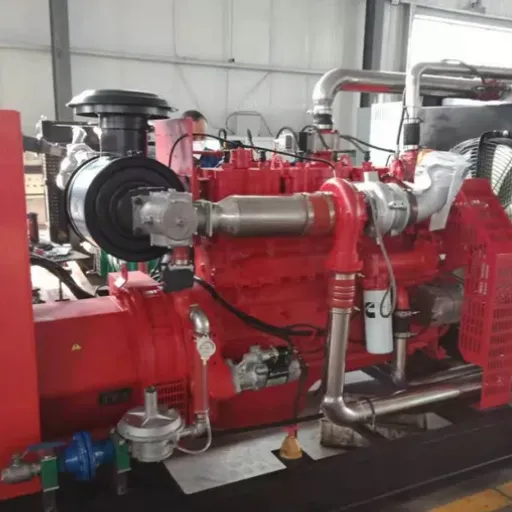
The engine and alternator reject a great deal of heat. The cooling system must keep the set within its operating temperature range, or output falls and components age faster.
Check the coolant level only when the set is cool and the system is not under pressure. Confirm the coolant type and mixture for the model, because the wrong mixture reduces freeze protection and corrosion resistance. Inspect the radiator or heat exchanger, the fan, and the hoses for leaks, cracks, or blockages. Confirm the ventilation openings in the room, because a set cannot cool itself with recycled hot air.
A warm-running set that never overheats on paper can still fail in a room with blocked airflow. Confirm the ventilation requirement for the model and check it during the site inspection.
Battery and starting system
The battery is one of the most common reasons a diesel generator set will not start. A set with a healthy engine still fails if the battery cannot turn it over. A healthy starting battery commonly shows a nominal 12 V, but voltage alone does not prove capacity.
Keep battery terminals clean and tight; corrosion raises resistance and reduces starting current.
Confirm the battery charge state on the schedule, because a battery self-discharges even when the set is not used.
Confirm the charger and its settings, since an unmaintained charger can overcharge or undercharge.
Test the battery under load, not just at open-circuit voltage, when the schedule calls for it, commonly at least once a year.
A maintenance lead at a telecom site once found that a remote standby set would not crank because the batteries had not been tested in two years. The charger was alive, but the batteries had lost capacity and could not deliver the starting current. The set had passed its no-load check because the control panel showed a healthy voltage reading.
A load test would have shown the true state of the batteries. Confirm the load-test method for the battery type and the model before you rely on a voltage reading alone.
Engine oil and lubrication
Oil carries heat, reduces wear, and holds contaminants in suspension. Over time it degrades, and a low or dirty oil level is a reliable way to shorten engine life.
Check the oil level on the schedule and top up only with the specification in the manual. Confirm the oil and filter change interval in engine hours or calendar time, whichever applies first. Common intervals fall between 250 and 500 running hours for many models, but the manual's figure for your set takes priority. Inspect the engine for oil leaks and report any new ones rather than topping up around them.
Record the hours and dates of oil changes. For a set that runs only a few hours each year, an oil change may still be needed every 12 months because oil degrades with time and temperature, not only with running.
Air intake and exhaust
An engine needs clean combustion air and a clear exhaust path.
Check the air filter indicator and replace the filter on the schedule. Inspect the intake for blockages, especially at dusty or construction sites. Confirm the exhaust routing, the silencer, and the discharge direction, and inspect them for leaks and sooting. A blocked intake or a restricted exhaust changes combustion and can raise temperature and reduce output.
Exhaust color is a useful early sign. Light smoke during a cold start is common, but steady black, blue, or white smoke under load should be investigated and confirmed against the manual and the operating conditions.
Electrical and control checks
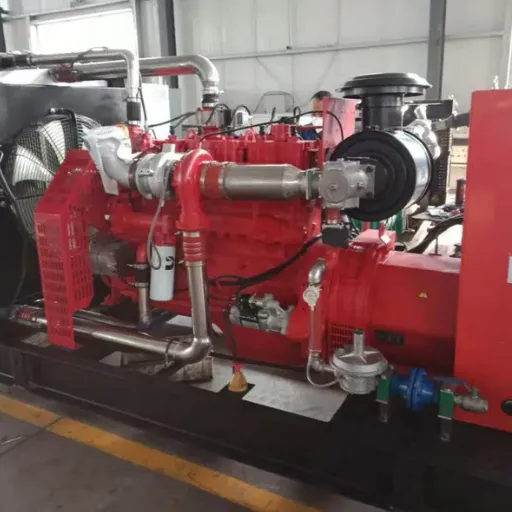
The control system starts the set, protects it, and switches the load. It should be checked as carefully as the engine.
Inspect electrical connections and terminals for heat, corrosion, and looseness.
Confirm voltage and frequency at no load and under load against the model documentation.
Test the alarms, protective devices, and the control panel functions on the schedule.
Confirm the automatic transfer switch operation and its settings, where the installation uses one.
Electrical work on generator sets should be carried out by qualified personnel and must follow the applicable safety standards for the site and destination market. Confirm the earthing arrangement and the protective devices recommended for the model before any work begins.
Safety note: Isolate the set and follow the model's lockout and isolation instructions before servicing electrical, fuel, or cooling systems. Work should be done by qualified personnel under the applicable local requirements.
Load bank testing
A set that runs for long periods below roughly 30% of its rated load accumulates combustion deposits. Unburned fuel and soot can form in the exhaust and on the valves, a condition sometimes called wet stacking. The set can appear healthy on no-load runs and then struggle when a real load appears.
A load bank test applies a controlled electrical load so the set runs near its rated output under supervision. A common supervised test runs for one to two hours at a defined load, but confirm the exact plan for your site. It does several things:
Confirms the set can carry load for the test duration.
Raises operating temperature enough to burn off deposits.
Reveals weak alternators, fuel starvation, and cooling problems that light-load running hides.
Produces a record of output, frequency, and voltage under load.
In North America, NFPA 110 sets out testing requirements for emergency and standby power systems. Confirm which schedule applies to your system class and jurisdiction, and arrange the load test with qualified personnel.
Ask the service provider to record the test conditions and results. That record becomes part of the maintenance documentation and gives you a basis for comparing the set's condition over time.
Maintenance records and documentation
A maintenance program is only as good as its records. Keep a logbook or digital log for each set that includes:
Running hours and the reason for each run.
Dates and results of checks, tests, and oil or filter changes.
Fuel added and fuel quality notes.
Alarms, faults, and the actions taken.
Load test results with the conditions and duration.
Store the manual, the datasheet, the installation and wiring guide, and any service or inspection documents for the model. When you purchase or discuss a set, request the current documentation so the maintenance plan is based on the exact model and its stated service requirements.
Who should perform the maintenance
Daily and weekly checks can be handled by trained site staff following the manual. Engine, electrical, and load-testing work should be performed by qualified personnel who follow the applicable standards.
Confirm with your supplier which service information, parts, and support documentation are available for the selected model. The company states that after-sales support is central to its service approach, but public claims about coverage and response times still need approved service terms. Request written clarification of what applies to your specific model and order.
Keep in mind that a preventive maintenance schedule is only useful if someone owns it. Assign responsibility for each check, set reminders for the calendar-based items, and review the log at least as often as the annual service.
Diesel generator maintenance mistakes to avoid
Most maintenance problems trace back to the same habits:
Skipping routine checks because the set rarely runs.
Relying on a voltage reading instead of a battery load test.
Letting fuel sit unused without checking for water and contamination.
Blocking ventilation or ignoring the cooling system.
Running only no-load tests and never testing under load.
Failing to keep a logbook, so no one knows what's been done.
Replacing parts with items that aren't in the manual specification.
A structured checklist prevents most of these errors. Confirm the schedule in the manual, assign an owner, and record the results. That's the whole program in one line.
Common diesel generator maintenance questions
How often should a diesel generator be tested?
A standby set is commonly exercised at least weekly or monthly, depending on the site and any applicable standard. Confirm the interval in the manufacturer's manual and, for emergency and standby systems in North America, the NFPA 110 schedule that applies to your system class. Weekly runs should normally be under load where the installation allows it.
Why will a diesel generator not start?
The battery is a common cause. Confirm the charge state, clean and tighten the terminals, and test the battery under load rather than relying on voltage alone. Check the fuel supply, filters, and starter connections, and confirm any control-panel fault codes against the manual.
What is load bank testing for a generator?
A load bank test applies a controlled electrical load so the set runs near its rated output under supervision. It confirms that the set can carry load, burns off light-load deposits, and produces a documented record of output, voltage, and frequency under load.
How do you maintain diesel fuel for a generator?
Check the fuel level, drain any water separator on the schedule, and inspect the tank for water and contamination. For sets that run rarely, confirm how long the fuel has been stored and whether fuel testing is warranted before relying on a long run.
Conclusion
The cold-storage manager rebuilt the maintenance program around the same schedule in this guide. The team assigned owners to each check, started the set weekly under load, serviced the fuel and cooling systems, and logged every run and test. At the next outage, the set carried the facility as expected.
Diesel generator maintenance works best when it is scheduled, documented, and tied to the actual model. Confirm the intervals in the manual, apply the checks that match your duty and environment, and keep a record of every service and test.
Before you plan the next service, prepare four items:
The model documentation, including the manual and any service schedule.
The running hours and the service log for the set.
The fuel, cooling, battery, and load-test results from the last cycle.
The site conditions, including ventilation, fuel arrangement, and any applicable standard.
Then confirm the current maintenance requirements with your supplier and request the applicable documentation for the model.
If you are evaluating a diesel generator or planning a service program, discuss your application and request the current product documentation so the set can be matched to your operating conditions and maintenance needs.
Recently Posted
-
How to choose a surge protection device
August 13, 2026Nadia manages a food-processing plant. After an electrical storm, the control board on her packaging line stopped responding. The Read More
 -
Diesel Generator Sizing Guide: How to Choose the Right Set
August 13, 2026Marta manages a cold-storage facility that loses product every time the grid supply drops. When the operations team bought a backu Read More
 -
Frequency Power Supply Selection: How to Choose the Right Equipment
August 13, 2026Marek runs an equipment-testing lab that recently took on three-phase units rated for 60 Hz. His site is supplied at 50 Hz, so the Read More
 -
Pump Flow and Head Requirements: A Buyer's Guide
August 13, 2026When Daniel's team replaced a process pump last spring, they ordered against a catalogue number and skipped the specification Read More

Contact Us
Recommended Products
-
 Large Capacity Ceiling Mounted Space Saving Indoor Pool DehumidifierNegotiableMOQ: 1 Piece
 -
Commercial Home Use Bathroom Dehumidification Swimming Pool Ceiling Mounted Mini DehumidifierNegotiableMOQ: 1 Piece
-
Greenhouse Grow Room Industrial Ceiling Mounted Duct Indoor Pool DehumidifierNegotiableMOQ: 1 Piece
-
Duokai OEM Indoor Dehumidifier Portable Swimming Pool Dehumidifier in Stock With CENegotiableMOQ: 1 Piece
-
High Quality Low Voltage ODM & OEM PLC Distribution CabinetNegotiableMOQ: 1 Set

-
Saladin Type Malt Production LineNegotiableMOQ: 1 Set
-
Seawater Desalination SystemUS$ 2000 - 1000000MOQ: 1 Set
-
High Speed Synthetic Lane Bowling Ball ReturnUS$ 50 - 2000MOQ: 10 Pieces
-
Reliable Automatic Six Axis Industrial Packing Robot With Self Diagnostic SystemNegotiableMOQ: 1 Piece
-
Multi-Travel Radius Six Axis Servo Robot for Custom Automation WorkstationNegotiableMOQ: 1 Piece

-
Labor Saving 6 Axis Industrial Robot Boost Workshop Production EfficiencyNegotiableMOQ: 1 Piece
-
Factory Direct Wholesale Carton Palletizer Packing Line Robot for MilkNegotiableMOQ: 1 Piece
-
Six-Axis Industrial Robotic Arm for Handling Welding Loading UnloadingNegotiableMOQ: 1 Piece
-
High-Automation High-Precision Six-Axis Metal Laser Industrial Welding RobotNegotiableMOQ: 1 Piece
-
Six-Axis Automatic Industrial Welding Robot Arm With Competitive PriceNegotiableMOQ: 1 Piece