
 Business License

Diesel Generator Sizing Guide: How to Choose the Right Set
Marta manages a cold-storage facility that loses product every time the grid supply drops. When the operations team bought a backup set, they chose a diesel generator using a single figure. They added up the facility's nameplate load and matched it to the nearest kVA.
The set started and ran on light load. The problem appeared during the first real outage, when the refrigeration compressors all restarted at once. The generator stalled.
The set was not the problem. The sizing had been based on a steady-state total, not on how the load behaves at start-up and across the duty cycle.
That experience is common. Diesel generator sizing most often fails when a buyer treats it as a one-number decision.
A diesel generator set that performs well in one site can be a poor fit for another. The load pattern, the duty, the power factor, the starting demand, the fuel and ventilation arrangement, the environment, and the documentation all matter. This diesel generator sizing guide covers six steps: the load and duty, the kVA and kW requirement, the site and installation conditions, documented model information, commercial terms, and common mistakes.
By the end, you'll have a checklist you can use before requesting a quotation, and you'll know which documents to ask for and which conditions to confirm with the supplier. If a technical detail in your enquiry is not covered here, request confirmation from the supplier rather than assuming compatibility.
If your application and load figures are ready, request the current product documentation so the candidate models can be checked against your operating conditions.
What diesel generator sizing involves
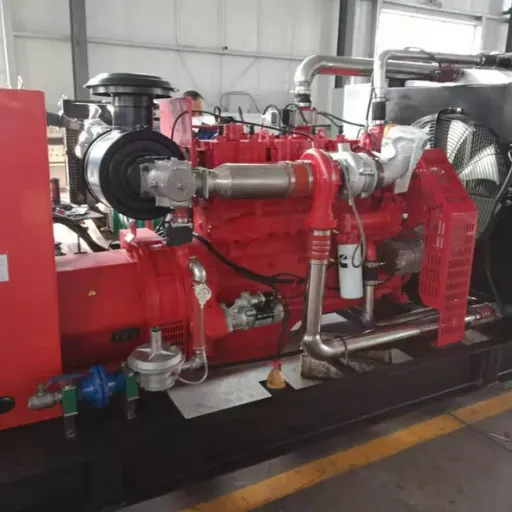
Diesel generator sizing is the process of matching a backup or prime-power requirement to a documented generator set model under defined operating conditions.
A diesel generator set, often called a genset, combines a diesel engine, an alternator, a control system, a fuel supply, and the supporting connections. The engine drives the alternator, and the alternator produces the AC output that the load consumes. Sizing is about confirming that the complete set, not just the engine or the alternator, can meet the load under the conditions at the site.
Common uses include:
Standby power during grid failures for facilities such as cold storage, hospitals, data centers, and manufacturing plants.
Prime power where no reliable grid supply is available, often for remote or temporary sites.
Continuous power for constant-load applications, such as process plants operating off-grid.
Construction, events, and other temporary applications with changing loads.
A key distinction matters here. The rating a supplier quotes for a generator set depends on the duty. The same physical set may be rated differently for standby, prime, or continuous use. Confusing these ratings is a common source of sizing errors.
XiAn Wisdom Computer Info&tech Co., Ltd includes diesel generators among its stated industrial and electromechanical product categories. Availability and specifications require confirmation for each enquiry. Selection guidance helps a buyer identify the appropriate category and prepare the information needed before a specific model is discussed.
Why does sizing matter? A mismatch shows up in different ways: a set that stalls when motors start, an alternator that overheats under sustained load, a fuel arrangement that cannot support the running hours, or a unit derated so heavily by altitude that it cannot reach its stated output. Most of these problems are avoidable when the buyer defines the requirements first and verifies the chosen model against current documentation.
Step 1: Define the load and how the set will be used
Sizing starts with the application, not with a catalogue page.
List every load the set must support
Write down what the generator set must power, in the order it will be used. Include the loads that run continuously and the loads that run only occasionally. A backup set that serves only essential equipment has a different requirement than a set that must power the entire facility.
Prepare these details:
The equipment the set must power or back up.
The intended use: standby for outages, prime power, or continuous operation.
The running loads and the occasional loads.
The largest motor or compressor and how often it starts.
Understand the duty: standby, prime, or continuous
Generator set ratings are tied to the duty. Confirm which rating applies to your use:
Standby rating applies to limited running during a power failure, with a defined overload margin and limited annual running hours.
Prime power rating applies where the load varies and the set runs as the main or only source of power.
Continuous power rating applies to a constant load run for long periods without interruption.
A set selected on its standby rating cannot necessarily run a continuous load at that figure. Confirm the rating basis and the operating conditions for the selected model.
How the load starts and stops
Loads behave differently at start-up and under steady state:
Resistive loads, such as heaters and lighting, draw current in proportion to the applied voltage.
Inductive loads, such as motors and compressors, draw a large starting current that can be several times their running current.
Electronic loads draw a nonlinear current and can affect power quality.
Combined loads, common in real facilities, need a sum of the individual requirements plus a margin for starting.
A site engineer named Lena was asked to size a set for a small workshop with three machine tools. She added the nameplate kW of each tool and picked the nearest size. On the first start-up test, the set's frequency sagged every time the largest machine started. The starting demand of the machines, not their nameplate totals, had not been included in the sizing.
The corrected sizing accounted for the starting current and the sequence in which the machines started.
Step 2: Work out the kVA and kW requirement
Once the load and duty are defined, convert them into the figures a generator set is rated in.
kVA, kW, and power factor
Generator sets are commonly rated in kilovolt-amperes (kVA) and kilowatts (kW). The two aren't the same.
Kilowatt (kW) is the real power the load converts into useful work.
Kilovolt-ampere (kVA) is the apparent power the alternator must deliver, which includes the reactive component.
Power factor is the ratio of real power to apparent power. Generator sets are often rated at a power factor of 0.8.
Sizing example: a load that draws 80 kW at a power factor of 0.8 needs roughly 100 kVA of apparent power. Sizing on kW alone understates the alternator requirement. Confirm how the kVA and kW ratings of a candidate model relate, and which figure matches the load.
Add the starting demand
The largest single motor, compressor, or pump drives the starting requirement. When that load starts, it draws current well above its running value. Confirm how the engine and alternator of the candidate set behave under this demand. A set sized for steady-state load alone may stall or drop frequency every time the largest load starts.
Allow for derating
Engine output changes with the environment. Confirm how the set's rating changes with:
Ambient temperature.
Altitude.
Site conditions such as dust, humidity, and airflow.
A set rated at sea level may not deliver its stated output at a high-altitude or high-temperature site. The supplier should confirm the applicable derating for your location.
Voltage and frequency
Confirm the output voltage, phase, and frequency required at the site and for the equipment being powered. Common values include 230 V single phase, 400 V three phase, or 380 V and 415 V three phase, but destination-market and load requirements vary. Confirm the exact values for the load and the market.
| Output frequency | Typical application |
|---|---|
| 50 Hz | Equipment and grids designed for a 50 Hz supply |
| 60 Hz | Equipment and grids designed for a 60 Hz supply |
| Single or three phase | Confirm the phase, voltage, and balancing for the load |
Matching voltage and frequency matters for equipment compatibility. Equipment rated for one supply system is not automatically safe or correct on another. Confirm the load's nameplate requirements and the set's output against the same conditions.
Step 3: Check site, fuel, and installation conditions
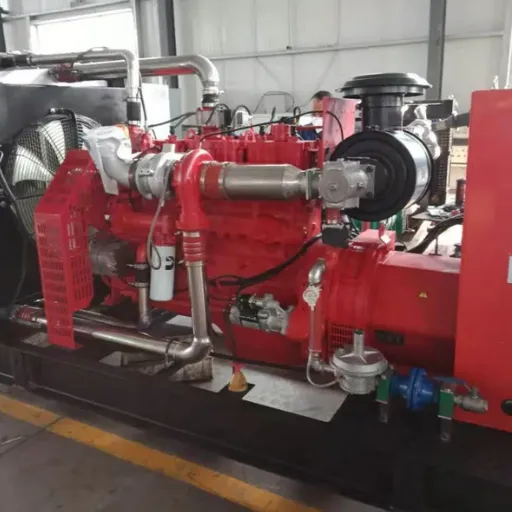
A generator set can be technically correct and still fail in a given facility if the fuel, ventilation, noise, and installation are not compatible.
Fuel supply and arrangement
Confirm the fuel arrangement for the site: a day tank, a bulk tank, or a connection to an existing supply. Confirm the fuel consumption at the expected load and the running hours the site requires. A set sized on paper can stop unexpectedly if the fuel supply cannot support the duty cycle.
Ventilation and cooling
Diesel generator sets need combustion air and cooling air. Confirm the airflow required by the model, the ventilation openings in the room, and the exhaust routing. An enclosed room without adequate airflow is a common cause of overheating and reduced output.
Noise and exhaust
Confirm the noise requirement for the site and its surroundings. Exhaust, acoustic enclosures, and silencers affect installation space and cost. Confirm the applicable local requirements and what the selected model includes.
Installation and access
Confirm the space for the set, including clearances, service access, cable routing, and the surface the set will stand on. Confirm the connection method for the output, the earthing arrangement, and the protective devices recommended for the model.
Safety note: Work on generator sets and electrical connections should be carried out by qualified personnel and must follow the applicable safety standards and regulations for the site and destination market.
Step 4: Compare documented model information
Once the load, duty, and site are defined, compare candidate models using their current documentation. This is where most buyers save time and avoid mistakes.
Which specifications to compare
Build a like-for-like comparison. Compare each model under the same operating conditions and from the same document version.
| Specification | What to confirm |
|---|---|
| Model number | Exact model and document version |
| Rating basis | Standby, prime, or continuous, and the conditions that apply |
| kVA and kW | Rated output and the power factor |
| Voltage and frequency | Output voltage, phase, and frequency |
| Starting capability | Behavior under the largest load's starting demand |
| Derating | Output at the site's altitude and ambient temperature |
| Fuel | Consumption, tank arrangement, and running hours |
| Environment | Ventilation, cooling, noise, and installation needs |
| Documentation | Datasheet, manual, wiring, and installation guide |
A comparison table is only as useful as its source. State the document version and the conditions for each figure. If a specification is missing, request it instead of assuming. Don't guess.
Request the current documentation
Ask the supplier for the datasheet, operating manual, installation and wiring guide, and any test or inspection documentation that applies to the model under consideration. Confirm the document version and the model scope. For project requirements, also confirm drawings, control interfaces, and the intended equipment.
Confirm operating conditions with the supplier
A datasheet lists ratings, but ratings apply under stated conditions. Confirm how the model behaves at your ambient temperature, at your load pattern, and after frequent start-ups. A documentation-first request is a normal part of the enquiry process.
Step 5: Confirm commercial and support information
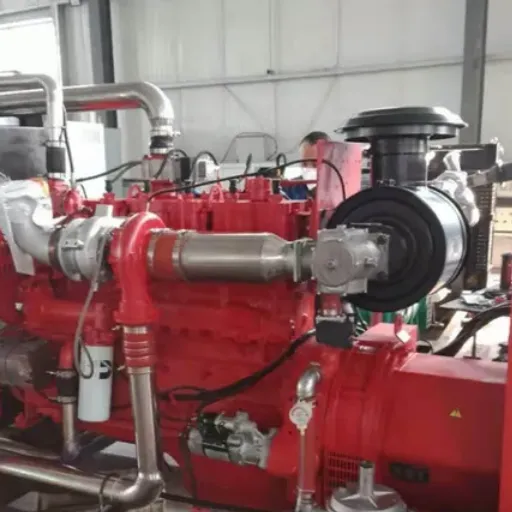
Technical fit is necessary, but the commercial and support picture matters just as much. Confirm these items in writing.
A procurement officer named Jonas received three quotations for the same backup requirement. The lowest price looked attractive until he compared the supporting documents. One quotation named a specific model with a datasheet, a standby rating, and a derating table. Another described only a generator category with no model number.
Jonas requested the missing documentation and confirmed the fuel arrangement and ambient conditions for his site. The cheapest option was not the one that matched his requirements.
Quotation, lead time, and minimum order quantity
Ask for a quotation that names the model, quantity, applicable units, and conditions. Confirm the lead time and the minimum order quantity (MOQ), and state what each price covers. Request that commercial terms are tied to the relevant model and order conditions rather than to a broad category.
Payment, shipping, and delivery
Confirm the payment terms, delivery basis, and shipping arrangement for the order. Ask what the quoted price includes, such as packaging, export documentation, or destination-country compliance documents. Delivery times and commercial conditions are order-specific, so confirm them in writing for the model and quantity you plan to order.
Warranty, after-sales support, and parts
Ask which warranty terms apply, what the support process covers, and which spare parts and manuals are available. Confirm these for the selected model and destination market.
XiAn Wisdom Computer Info&tech Co., Ltd states that after-sales support is central to its service approach. Public claims about coverage or response times still need approved service terms. Request written clarification for your specific order.
Destination-market and compliance requirements
Confirm the electrical, safety, and compliance requirements for the destination country. Standards bodies publish guidance that buyers and suppliers reference. ISO 8528 covers the ratings and performance of reciprocating internal combustion engine driven alternating current generating sets, and the International Electrotechnical Commission (IEC) publishes related electrical standards. For emergency and standby power systems in North America, NFPA 110 is commonly referenced. Confirm which standards apply to your market and request the applicable documentation.
Diesel generator sizing mistakes to avoid
Most sizing errors trace back to the same habits:
Sizing on steady-state kW alone and ignoring power factor, so the kVA requirement is understated.
Using the standby rating for a continuous or prime-power application.
Forgetting the starting demand of the largest motor or compressor.
Ignoring derating for altitude and ambient temperature.
Ordering without confirming the fuel arrangement, ventilation, and exhaust requirements.
Ordering without confirming the current datasheet, manual, and test documentation.
A structured checklist prevents most of these errors. Define the load and duty, calculate the kVA and kW requirement, check the site, compare documented data, and confirm commercial terms. That is the whole process in one line.
What information do you need before choosing a diesel generator?
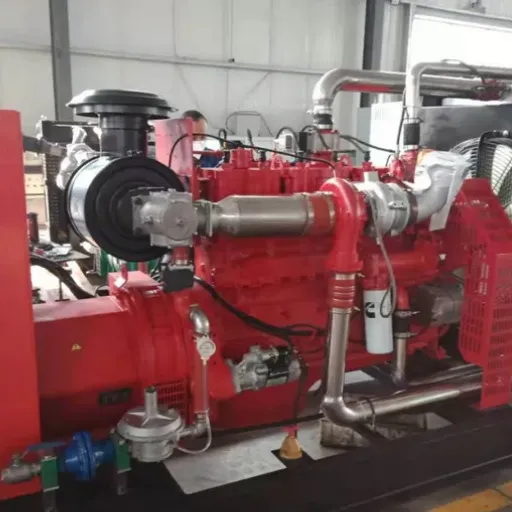
Confirm six things: the load list and duty, the kVA and kW requirement including starting demand, the voltage and frequency, the site conditions including fuel and ventilation, the current documentation for each candidate model, and the commercial and support terms. Verify the selected model's datasheet under the same operating conditions you plan to use before you request a quotation.
Conclusion
Marta's cold-storage facility solved the problem by redoing the sizing exercise before the next purchase. The team documented the compressor starting demand, confirmed the standby rating basis, and checked the model documentation against the site's fuel and ventilation conditions. The follow-up set performed as expected because the sizing process matched the actual application.
Diesel generator sizing works best when it starts with the application and ends with verified information. Reuse the checklist in this diesel generator sizing guide for every new requirement.
Before you request a quotation, prepare six items:
The load list and the duty: standby, prime, or continuous.
The kVA and kW requirement, including starting demand and power factor.
The output voltage, phase, and frequency.
The site conditions: fuel, ventilation, cooling, noise, and installation.
The current documentation for each candidate model.
The commercial, support, and compliance terms for the destination market.
Then confirm the selected model's specifications and current documentation with the supplier.
If you're evaluating a diesel generator for a facility, discuss your application requirements and request the current product documentation so the model can be checked against your operating conditions.
Confirming those details before you order saves time, avoids installation surprises, and gives you a sound basis for comparing offers.
Recently Posted
-
How to choose a surge protection device
August 13, 2026Nadia manages a food-processing plant. After an electrical storm, the control board on her packaging line stopped responding. The Read More
 -
Diesel Generator Maintenance Guide: What to Check and When
August 13, 2026A diesel generator set fails when it is needed most, and rarely by accident. The standby set in the engine room has seen no servic Read More
 -
Frequency Power Supply Selection: How to Choose the Right Equipment
August 13, 2026Marek runs an equipment-testing lab that recently took on three-phase units rated for 60 Hz. His site is supplied at 50 Hz, so the Read More
 -
Pump Flow and Head Requirements: A Buyer's Guide
August 13, 2026When Daniel's team replaced a process pump last spring, they ordered against a catalogue number and skipped the specification Read More

Contact Us
Recommended Products
-
 Large Capacity Ceiling Mounted Space Saving Indoor Pool DehumidifierNegotiableMOQ: 1 Piece
 -
Commercial Home Use Bathroom Dehumidification Swimming Pool Ceiling Mounted Mini DehumidifierNegotiableMOQ: 1 Piece
-
Greenhouse Grow Room Industrial Ceiling Mounted Duct Indoor Pool DehumidifierNegotiableMOQ: 1 Piece
-
Duokai OEM Indoor Dehumidifier Portable Swimming Pool Dehumidifier in Stock With CENegotiableMOQ: 1 Piece
-
High Quality Low Voltage ODM & OEM PLC Distribution CabinetNegotiableMOQ: 1 Set

-
Saladin Type Malt Production LineNegotiableMOQ: 1 Set
-
Seawater Desalination SystemUS$ 2000 - 1000000MOQ: 1 Set
-
High Speed Synthetic Lane Bowling Ball ReturnUS$ 50 - 2000MOQ: 10 Pieces
-
Reliable Automatic Six Axis Industrial Packing Robot With Self Diagnostic SystemNegotiableMOQ: 1 Piece
-
Multi-Travel Radius Six Axis Servo Robot for Custom Automation WorkstationNegotiableMOQ: 1 Piece

-
Labor Saving 6 Axis Industrial Robot Boost Workshop Production EfficiencyNegotiableMOQ: 1 Piece
-
Factory Direct Wholesale Carton Palletizer Packing Line Robot for MilkNegotiableMOQ: 1 Piece
-
Six-Axis Industrial Robotic Arm for Handling Welding Loading UnloadingNegotiableMOQ: 1 Piece
-
High-Automation High-Precision Six-Axis Metal Laser Industrial Welding RobotNegotiableMOQ: 1 Piece
-
Six-Axis Automatic Industrial Welding Robot Arm With Competitive PriceNegotiableMOQ: 1 Piece