
 Business License

How to choose an ice maker for a commercial application
Last summer, the kitchen manager at a busy hotel in Miami watched his breakfast line slow to a crawl because the ice maker could not keep up during the morning rush. The machine was only 18 months old, but it had been sized for average daily use, not peak demand. By noon, the staff were buying bagged ice from a convenience store. The real problem was not the brand or the price. It was that the buyer had not matched the equipment to the application before ordering. This article explains how to choose an ice maker for a commercial application by matching capacity, ice type, and installation requirements to real peak demand.
If you're selecting a commercial ice maker, you've probably already noticed how many options exist. Capacity claims, ice shapes, cooling systems, and certification labels can make the decision feel more complicated than it needs to be. The good news is that a structured checklist keeps the process simple. This guide explains how to choose an ice maker for a commercial application. It walks you through defining your daily requirement, selecting the right ice type, checking installation conditions, verifying certifications, and confirming model-specific documentation before you request a quotation.
By the end of this article, you will be able to:
Estimate realistic daily ice demand for your operation.
Match ice type and machine configuration to your application.
Check water, drainage, power, ventilation, and space requirements.
Identify the certifications and compliance markers relevant to your market.
Prepare a documentation checklist before contacting a supplier.
Want to narrow down your options quickly? Start by listing your peak daily ice use, required ice type, and available utilities. Then discuss your application requirements with a supplier who can confirm model-specific details.
How do you choose an ice maker for a commercial application?
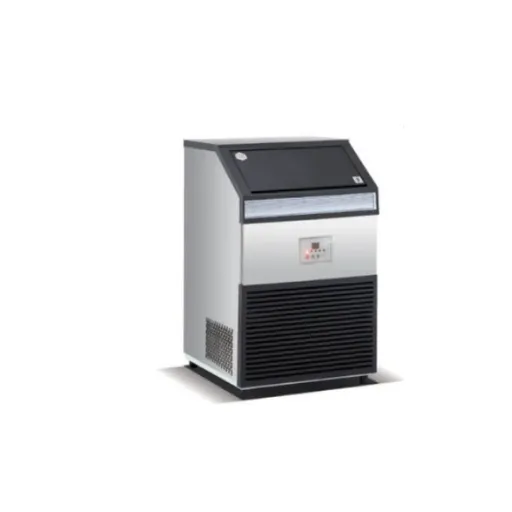
Choose an ice maker for a commercial application by defining your peak daily ice demand and matching the ice type and machine configuration to your use. Then check water, drainage, power, and ventilation conditions. Finally, confirm the certifications and operating costs for your market, and request current model documentation before requesting a quotation.
Define the application and peak daily demand.
Select the right ice type and machine configuration.
Check site conditions and utility requirements.
Verify certifications and compliance for your market.
Compare operating costs and maintenance requirements.
Prepare a documentation checklist before requesting a quotation.
1. Start With the Commercial Ice Maker Application, Not the Capacity Claim
Commercial ice makers are not interchangeable. For example, a machine that works well in a hotel lobby beverage station may be the wrong choice for a seafood display or a hospital dietary department. The first step in how to choose an ice maker for a commercial application is to define what the ice will be used for, when demand peaks, and how the ice will be handled after it is produced.
Common commercial applications
Restaurants and bars: Cubed or nugget ice for soft drinks, cocktails, and water service.
Hotels and event venues: High-volume cubed or gourmet ice for guest-facing beverage stations and banquet service.
Seafood and produce displays: Flake ice for chilled display beds and cold-chain holding.
Healthcare facilities: Nugget or flake ice for patient hydration, dietary service, and therapeutic use.
Convenience stores and fast food: Nugget or cube ice for self-service dispensers and fountain drinks.
Food processing and industrial use: Flake ice for mixing, cooling, or transport applications.
Each application affects the required ice form, production schedule, storage needs, and hygiene standards. For example, flake ice melts faster than full cubes, so it is unsuitable for long-lasting beverage cooling but excellent for food display. For seafood displays and food processing, review our flake ice machine selection guide to compare output, bin size, and cooling system options. Nugget ice is soft and chewable, which patients often prefer, but it may not suit every bar program.
Commercial ice maker capacity guide: calculate realistic daily demand
Manufacturers publish daily production figures, but those figures are usually measured under ideal conditions. A more useful number is the AHRI-certified capacity, which is tested at 90 °F ambient air and 70 °F inlet water. In a hot kitchen, actual output can be 15% to 25% lower than the headline ideal-condition rating.
Use the following steps to estimate demand:
Count seats, covers, or servings during the busiest shift.
Estimate ice per serving: A typical restaurant uses 1.5 to 2 lb of ice per customer; bars often use 3 lb or more per seat.
Add kitchen, display, and back-of-house use separately.
Apply a peak multiplier: Size the machine for the busiest day, not the average day.
Compare the AHRI rating, not the ideal rating, to your peak requirement.
When Maria opened her seafood counter in Tampa, she asked her supplier for a 500 lb/day machine based on her average daily sales. During Friday and Saturday evenings, demand doubled, and the machine could not refill the display bin fast enough. After calculating peak load and switching to an AHRI-rated 700 lb/day unit with a larger bin, she eliminated the weekend shortfall. The difference was not a bigger budget. It was matching the capacity to the real peak.
Plan for storage, not just production
An ice maker head produces ice continuously, but it needs a bin or dispenser to hold it. Make sure the bin capacity covers your largest surge in use. A common mistake is pairing a high-production head with a small undercounter bin that empties during the lunch rush.
2. Choose the Right Ice Type and Machine Configuration
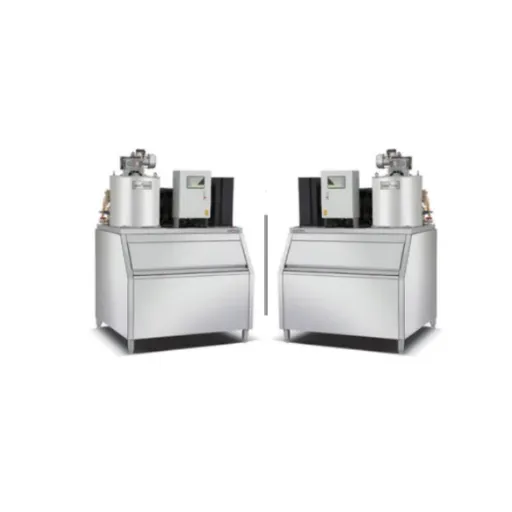
Once you know the application, the next decision in how to choose an ice maker for a commercial application is ice form and machine layout. The right combination affects drink quality, food safety, storage efficiency, and maintenance access.
Ice type comparison
| Ice type | Best for | Notes |
|---|---|---|
| Full cube | Bars, restaurants, hotels | Slow melting, clear appearance, good for bulk cooling |
| Half cube | Fast food, convenience stores, soft drinks | Blends easily, fills cups well, higher displacement |
| Nugget / pearl | Healthcare, casual dining, fountain drinks | Soft, chewable, absorbs flavor, higher production energy |
| Flake | Seafood displays, produce, food processing, healthcare | Molds around product, melts quickly, not for beverage cooling |
| Gourmet / top-hat | Premium bars, upscale restaurants | Large, clear, slow melting, often lower production volume |
If you are unsure which form is best, describe your menu or display requirements to the supplier rather than choosing by appearance alone.
Commercial ice maker types and machine configuration options
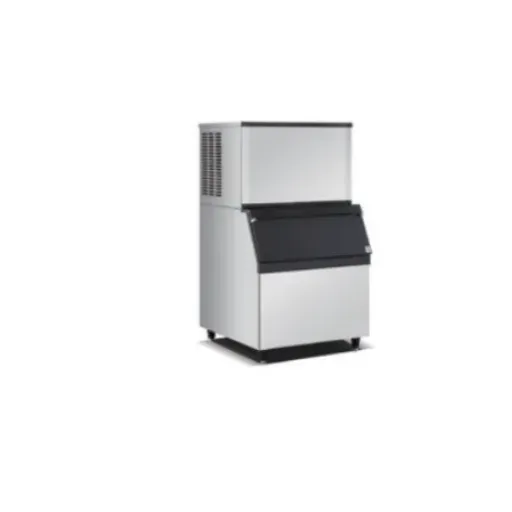
Modular ice maker head: Sits on a separate bin or dispenser. Best for high-volume locations and flexible layouts.
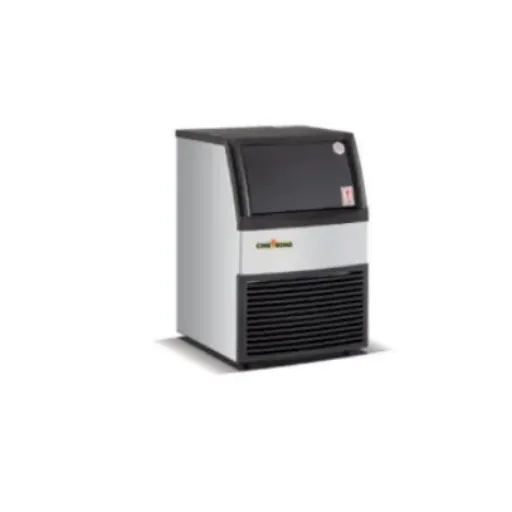
Undercounter ice maker: Self-contained unit with built-in storage. Best for bars, coffee shops, and small kitchens with limited space.
Countertop dispenser: Produces and dispenses ice directly. Common in healthcare and self-service areas.
Combination ice and water dispenser: Provides both ice and chilled water from one unit. Useful in offices and cafeterias.
Tom, the owner of a cocktail bar in Chicago, originally bought an undercounter unit because it fit under his existing counter. After six months, he found that the bin was too small for weekend rushes and the machine was hard to service in the tight space. He replaced it with a modular head on a larger bin placed in the back corridor. The upfront layout change was minor, but the operational improvement was immediate.
Cooling system options
Air-cooled: Uses ambient air to remove heat. Lower water use, but adds heat and noise to the room. Requires clearance for airflow.
Water-cooled: Uses water to remove heat. Quieter and more consistent in hot environments, but consumes more water and may be restricted in drought-prone areas.
Remote-cooled: Places the condenser outside or in another room. Reduces heat and noise in the service area, but installation is more complex.
Your ambient temperature and local water regulations often determine which cooling system is practical. Always confirm that the selected configuration is compatible with your site before ordering.
3. Check Site Conditions and Utility Requirements
A commercial ice maker is only as reliable as the utilities and space around it. Therefore, before comparing models, gather accurate information about the installation location. This step prevents surprises during delivery and commissioning.
Ice maker installation requirements: space and clearance
Measure the available width, depth, and height, including the bin or dispenser. Then add clearance for ventilation and service access. Most manufacturers recommend 6 to 12 inches of clearance at the sides and rear, plus enough space in front to remove panels and access filters.
Water supply and quality
Commercial ice makers need a clean, pressurized cold-water line. Key checks include:
Water pressure: Confirm the minimum and maximum inlet pressure listed in the model documentation.
Water temperature: Inlet water temperature affects production capacity and ice clarity. Cooler water generally improves output.
Water quality: Hard water, sediment, and chlorine can affect ice taste, machine scale, and component life. Many locations benefit from a filtration system.
Backflow prevention: Local plumbing codes may require a backflow preventer or air gap.
Ice maker installation requirements: drainage
Ice makers need a drain for meltwater, cleaning cycles, and purge water. Check whether the model requires:
A gravity drain close to the unit.
A drain pump for locations where gravity drainage is not available.
Specific trap or air-gap requirements under local code.
The NSF/ANSI 12 standard for automatic ice making equipment includes requirements for drainage design to prevent contamination, including the rule that liquid waste drain lines may not pass through the ice machine or storage bin.
Electrical requirements
Verify the following for each candidate model:
Voltage: Common commercial ratings include 115 V, 208 to 230 V, and 460 V.
Phase: Single-phase or three-phase, depending on the unit and local supply.
Frequency: 50 Hz or 60 Hz, matching the destination market.
Circuit size: Confirm breaker and wiring requirements with a qualified electrician.
Do not assume that a machine will work on your existing circuit. Electrical incompatibility is a common and expensive installation mistake.
Ventilation and ambient temperature
Air-cooled units especially depend on good ventilation. If the machine will sit near cooking equipment, in a small room, or in a warm climate, use the AHRI 90 °F/70 °F rating for sizing. Remote-cooled or water-cooled units may be a better fit in high-heat locations.
4. Verify Certifications and Compliance for Your Market
Certifications are not just labels. Instead, they confirm that the equipment meets recognized safety, sanitation, or performance standards for your market. The certifications you need depend on the destination country and the application.
NSF/ANSI 12 ice machine certification for food safety
NSF/ANSI 12 is the standard for automatic ice making equipment used to produce ice for human consumption. It covers materials, design, construction, cleanability, and performance. In the United States, health departments and food safety inspectors typically require commercial ice makers in foodservice to be NSF/ANSI 12 certified. The current edition is NSF/ANSI 12:2024, with requirements including visible cleaning indicators and documented sanitizing frequencies.
Electrical and safety certifications
UL / cULus: Common electrical safety certification for the United States and Canada.
ETL: Recognized by OSHA and equivalent to UL for many inspection purposes.
CE: Required for sale and use in the European Union.
Always confirm which certification marks are accepted in your destination market before finalizing an order.
Energy efficiency
ENERGY STAR certified commercial ice makers meet efficiency criteria for energy and water use. ENERGY STAR estimates that certified batch-type machines save about 700 kWh and USD 150 per year compared to standard models, or roughly USD 1,200 over the product lifetime. Efficiency ratings vary by ice type and harvest rate, so compare documented figures for the specific models under consideration.
Local health codes and FDA Food Code
In the United States, the FDA Food Code provides model guidance for safe ice handling, storage, and dispensing. Local health departments may adopt their own rules based on the Food Code. Buyers outside the United States should confirm the relevant national or regional food safety and electrical requirements before ordering.
When David opened his quick-service restaurant in Phoenix, he assumed all ice makers sold by major distributors were NSF certified. He ordered a lower-cost unit from an overseas supplier to save on the initial purchase. During the health department plan review, the inspector asked for the NSF/ANSI 12 certificate. The machine did not carry the mark, and David had to replace it before opening. The savings disappeared, and his opening was delayed by three weeks.
5. Compare Operating Costs and Maintenance Requirements
The purchase price is only part of the total cost of owning a commercial ice maker. However, when you choose an ice maker for a commercial application, remember that water, electricity, cleaning chemicals, filters, and service calls add up over the life of the machine. Compare these factors using the model-specific documentation for each option.
Energy and water consumption
Ask the supplier for the documented energy use in kWh per 100 lb of ice and water use in gallons per 100 lb of ice. ENERGY STAR and FEMP guidelines provide useful benchmarks for air-cooled machines. Water-cooled machines are not covered by ENERGY STAR, so compare them against federal or local efficiency criteria instead.
Cleaning and sanitizing
Ice makers require regular cleaning and sanitizing to prevent scale, slime, and biofilm buildup. Key questions include:
Does the machine have a self-cleaning cycle, or is manual cleaning required?
Are components easy to access and disassemble?
What cleaning chemicals does the manufacturer recommend?
How often does the manual recommend cleaning based on local water conditions?
The NSF/ANSI 12:2024 update emphasizes clear cleaning indicators and documented sanitizing frequencies, so check that the manufacturer's instructions match current requirements.
Filtration and water treatment
A water filter protects the machine from scale and sediment and improves ice clarity and taste. Confirm whether the supplier recommends a specific filter, the replacement interval, and whether the filter is included or sold separately.
Service access and warranty
Before ordering, ask about:
Warranty period and what it covers.
Availability of replacement parts for your destination market.
Recommended service intervals and whether local technicians can support the model.
Documentation language, including manuals and wiring diagrams.
A machine with lower upfront cost but limited parts availability can become expensive if it fails.
6. Finalize Your Commercial Ice Maker Selection Before Requesting a Quotation
The final step in how to choose an ice maker for a commercial application is to prepare a complete enquiry package. Use this equipment selection checklist to capture your application, site, utility, compliance, and commercial requirements before contacting a supplier.
Application and operational information
Intended application and ice type.
Estimated peak daily ice demand in pounds or kilograms.
Operating schedule and peak service hours.
Ambient temperature range and installation environment.
Site and utility information
Available width, depth, height, and clearance.
Water pressure, temperature, and quality.
Drainage type and location.
Electrical supply: voltage, phase, frequency, and available circuit capacity.
Cooling preference: air-cooled, water-cooled, or remote-cooled.
Compliance and commercial requirements
Required certifications for the destination market.
Local health code or food safety requirements.
Language requirements for manuals and labels.
Destination country, shipping terms, and import documentation needs.
Commercial terms to confirm
Before committing, request written confirmation of:
Model number and exact specification.
Rated capacity under AHRI and ideal conditions.
Electrical, water, drainage, and dimensional requirements.
Warranty terms, spare parts availability, and service information.
Lead time, minimum order quantity, pricing, payment terms, and shipping arrangements.
Ready to compare specific models? Use this checklist to request model documentation for the ice makers that match your requirements, then compare like-for-like specifications before requesting a quotation.
Conclusion
Choosing a commercial ice maker becomes straightforward when you move from marketing claims to application requirements. Start with the ice type and peak daily demand, then select the machine configuration and cooling system that fit your space and utilities. Verify the certifications your market requires, compare documented operating costs, and confirm maintenance and service support before ordering.
The most expensive mistake is usually not the purchase price. It is ordering a machine that is under-sized, incompatible with the site, or missing the certification the health inspector expects. A little preparation prevents those problems.
If you are evaluating commercial ice makers for a restaurant, hotel, healthcare facility, or food-processing operation, gather your requirements checklist and contact a supplier who can provide current, model-specific documentation. XiAn Wisdom Computer Info&tech Co., Ltd supplies ice-making equipment categories including ice makers and flake ice machines, and can help you choose an ice maker for a commercial application by discussing your application, installation conditions, and documentation needs before recommending a suitable model.
Request a quotation with your application details, or contact the sales team to review your peak capacity, site conditions, and certification requirements.
Recently Posted
-
Centrifugal blower selection: how to choose the right model for your application
August 12, 2026Most centrifugal blower selection mistakes are not made inside the machine. They are made before the enquiry goes out, when a buye Read More
 -
How to Select a Pump for Your Application: A Buyer's Guide
August 12, 2026In March 2026, a maintenance supervisor at a beverage plant in Monterrey filed a one-line request: "Get us a new water pump.& Read More
 -
Industrial Pump Selection: A Practical Guide for Buyers
August 12, 2026A plant engineer at a beverage bottling facility in Rotterdam ordered three pumps in March 2025, choosing them by flow rate and pr Read More
 -
How to choose water treatment equipment: a buyer's selection guide
August 12, 2026What would a failed water-quality audit cost your operation? For a food processor, a beverage plant, or a commercial facility, the Read More

Contact Us
Recommended Products
-
 Large Capacity Ceiling Mounted Space Saving Indoor Pool DehumidifierNegotiableMOQ: 1 Piece
 -
Commercial Home Use Bathroom Dehumidification Swimming Pool Ceiling Mounted Mini DehumidifierNegotiableMOQ: 1 Piece
-
Greenhouse Grow Room Industrial Ceiling Mounted Duct Indoor Pool DehumidifierNegotiableMOQ: 1 Piece
-
Duokai OEM Indoor Dehumidifier Portable Swimming Pool Dehumidifier in Stock With CENegotiableMOQ: 1 Piece
-
High Quality Low Voltage ODM & OEM PLC Distribution CabinetNegotiableMOQ: 1 Set
-
Saladin Type Malt Production LineNegotiableMOQ: 1 Set
-
Seawater Desalination SystemUS$ 2000 - 1000000MOQ: 1 Set
-
High Speed Synthetic Lane Bowling Ball ReturnUS$ 50 - 2000MOQ: 10 Pieces
-
Reliable Automatic Six Axis Industrial Packing Robot With Self Diagnostic SystemNegotiableMOQ: 1 Piece
-
Multi-Travel Radius Six Axis Servo Robot for Custom Automation WorkstationNegotiableMOQ: 1 Piece
-
Labor Saving 6 Axis Industrial Robot Boost Workshop Production EfficiencyNegotiableMOQ: 1 Piece
-
Factory Direct Wholesale Carton Palletizer Packing Line Robot for MilkNegotiableMOQ: 1 Piece
-
Six-Axis Industrial Robotic Arm for Handling Welding Loading UnloadingNegotiableMOQ: 1 Piece
-
High-Automation High-Precision Six-Axis Metal Laser Industrial Welding RobotNegotiableMOQ: 1 Piece
-
Six-Axis Automatic Industrial Welding Robot Arm With Competitive PriceNegotiableMOQ: 1 Piece