
 Business License

Refrigerated Cabinet Selection Checklist: How to Specify the Right Unit for Your Operation
Maria, a procurement manager for a mid-sized foodservice distributor, thought she had done everything right. She compared three refrigerated cabinet quotes, chose the lowest price, and scheduled delivery for a Tuesday. When the units arrived, the maintenance team discovered the electrical supply was single-phase while the cabinets required three-phase power, the door swing blocked a busy aisle, and the ventilation clearance was half of what the datasheet required. The project was delayed by two weeks while the site was reworked. Her experience is not unusual, and it explains why a simple refrigerated cabinet selection checklist can save more time and money than the initial purchase price.
You probably already know that refrigerated cabinets are essential for temperature-sensitive products. The real challenge is translating your operating needs into a complete specification that can be checked against a model datasheet before you order.
In this article, you will learn how to build a refrigerated cabinet selection checklist that covers application, capacity, site conditions, utilities, documentation, and commercial terms. Use it as a practical refrigerated cabinet selection guide to prepare your requirements, compare models on a like-for-like basis, and avoid the specification gaps that cause installation delays and unexpected costs.
Why a Checklist Matters More Than a Model Number
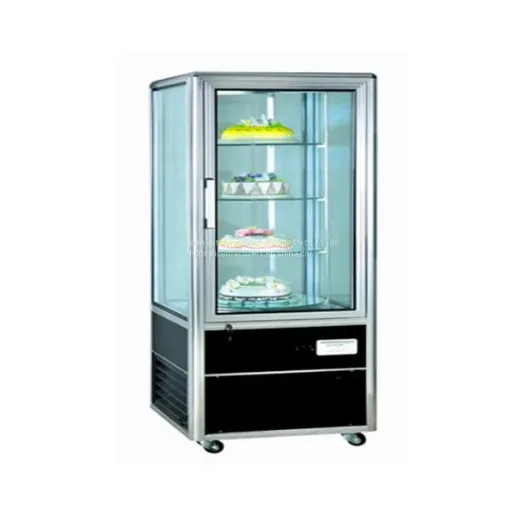
A refrigerated cabinet is not a single generic product. The right unit depends on what you store, where you install it, how much product moves through it, and which electrical and ventilation conditions exist on site. Selecting from a catalog page alone risks matching the wrong cabinet to the wrong application.
A checklist forces the buyer to collect information before requesting a quotation. It also makes it easier for the supplier to recommend a suitable model or to flag when a requested model will not work in the proposed location.
The most expensive mistake is often not the cabinet itself. It is the cost of site changes, electrical upgrades, delayed commissioning, or discovering that the temperature range is wrong for the product. A written checklist reduces the chance that an important detail is assumed rather than confirmed.
The Cost of Missing One Specification
When a single specification is missed, the effects can cascade. A cabinet that needs 200 mm of rear clearance but is placed against a wall will work harder, consume more energy, and may fail prematurely. A unit sized for 500 liters of product but loaded with 700 liters will struggle to hold temperature. A cabinet rated for +2 °C to +8 °C cannot safely hold frozen goods.
Each gap creates operational risk. Food safety audits, pharmaceutical storage rules, and cold-chain compliance requirements all depend on the cabinet maintaining the correct temperature under real operating conditions. Documenting every requirement before purchase is the first step toward meeting those obligations.
What a Refrigerated Cabinet Must Actually Do
Before comparing models, define the job the cabinet must perform:
Maintain a stable temperature range for the stored product.
Fit the available floor space and access routes.
Operate reliably under the ambient temperature and humidity of the installation site.
Match the available electrical supply and safety requirements.
Allow staff to load, retrieve, and clean the unit safely and efficiently.
Support the documentation needs of your market, auditor, or customer.
Only after these requirements are clear can you compare model specifications with confidence.
Start Your Refrigerated Cabinet Selection Checklist With the Application
The first section of any refrigerated cabinet selection checklist should describe what the cabinet will store and how it will be used. This is the foundation every other decision builds on.
Product Type and Storage Purpose
Different products need different temperature ranges and airflow patterns. A cabinet for fresh dairy, a cabinet for vaccines, and a cabinet for frozen seafood are not interchangeable. All of them are forms of temperature-controlled storage, but each has distinct refrigerated cabinet requirements.
Write down the product category, the required storage temperature, and any special rules that apply. For food products, the U.S. Food and Drug Administration publishes cold food storage guidance that can help you confirm safe temperature ranges for common items. For pharmaceutical or medical products, refer to the relevant regulator or manufacturer storage instructions.
Also consider how the product is packaged. Open trays, sealed cartons, and bulk bins all affect how air circulates inside the cabinet and how much usable volume you actually have.
Temperature Range and Capacity Needs
Capacity is usually the first number buyers look at, but it is also the easiest to misinterpret. A cabinet rated at 1,000 liters of gross volume may offer far less usable space once shelves, door openings, and airflow zones are considered.
Prepare these numbers before you request a quotation:
Daily throughput: How much product enters and leaves the cabinet each day?
Peak load: What is the maximum quantity stored at one time?
Load temperature: Will product enter at room temperature, chilled temperature, or frozen temperature?
Recovery time: How quickly must the cabinet return to set point after a door opening?
A higher-capacity cabinet is not always the right answer. An oversized cabinet in a low-load application can cycle inefficiently, while an undersized cabinet will run continuously and still fail to hold temperature.
Ambient Conditions and Placement
The environment around the cabinet affects performance more than many buyers realize. A cabinet installed in a hot kitchen, a humid warehouse, or a narrow corridor will behave differently from the same unit in a climate-controlled room.
Record the following for the intended location:
Maximum ambient temperature.
Relative humidity range.
Proximity to heat sources such as ovens, grills, or direct sunlight.
Floor condition and slope.
Traffic patterns that affect how often the door opens.
If you are unsure about ambient conditions, measure them during the busiest operating period rather than assuming the room is always at a comfortable temperature.
Site and Utility Checks Before You Compare Models
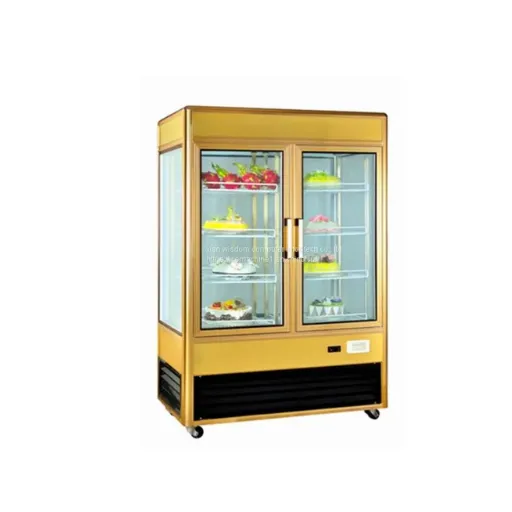
Once the application is clear, the next section of your refrigerated cabinet selection checklist should cover the physical site and utility connections for your commercial refrigeration equipment. This is where most installation surprises happen.
Electrical Requirements
Electrical incompatibility is one of the most common causes of delivery delays. Do not assume that a cabinet will work with the existing outlet. Confirm these details before comparing models:
Voltage, for example 220 V or 380 V.
Frequency, for example 50 Hz or 60 Hz.
Phase, for example single-phase or three-phase.
Required circuit rating and breaker size.
Plug type and cord length, if applicable.
Need for a dedicated circuit or earth leakage protection.
If the site supply does not match the cabinet requirement, ask whether a suitable alternative model is available or whether an electrical upgrade is needed. Factor the upgrade cost into the total project budget before you make a decision.
Ventilation and Clearance
Refrigerated cabinets reject heat through the condenser. Without enough clearance, heat builds up, efficiency drops, and components wear faster. Every model has specific clearance requirements, and these must be respected even in tight spaces.
Check the required clearances for:
Rear clearance for condenser airflow.
Side clearance for door swing and service access.
Top clearance if the condenser is mounted above.
Front clearance for loading, unloading, and aisle access.
Also consider whether the location allows warm exhaust air to recirculate back into the intake. Recirculation is a common problem when cabinets are lined up against walls or placed in small alcoves.
Floor Loading and Access
A large commercial refrigerated cabinet can weigh hundreds of kilograms when empty and significantly more when loaded. Verify that the floor can support the unit, especially in older buildings or on mezzanine floors.
Access is just as important. Measure doorways, corridors, elevators, and ramps along the delivery path. A cabinet that fits the installation space but cannot reach it is an expensive problem. Also confirm whether the supplier provides placement, leveling, and commissioning services.
Water Supply and Drainage, If Applicable
Some refrigerated cabinets include features that need a water connection or drainage point. Examples include humidified produce cabinets, units with automatic defrost drains, or cabinets with integral ice makers.
If your selected model needs water or drainage, confirm:
Water pressure and quality requirements.
Drain location and slope.
Local plumbing codes that apply to the installation.
Whether a drain pump or condensate evaporator is included.
These details are easy to overlook but essential for a clean installation.
Compare Documented Model Specifications
With your application and site conditions recorded, you can now compare models on a like-for-like basis. The key is to request current, model-specific refrigerated cabinet specifications and to read them against your actual operating conditions.
What to Request From the Supplier
Before accepting any quotation, ask for the following for each model under consideration:
Model number and product description.
External and internal dimensions.
Net and gross capacity.
Temperature range and control accuracy.
Rated electrical parameters.
Refrigerant type, if relevant to your market regulations.
Clearance and ventilation requirements.
Noise level, if important for the installation site.
Weight and shipping dimensions.
Applicable documentation such as datasheets, manuals, and certificates.
Keep a record of the document version and date. Older documentation may not reflect the current product.
Reading the Datasheet With Your Conditions
A cabinet datasheet is written for standard test conditions. Your site may be hotter, more humid, or more heavily loaded than the test environment. When comparing specifications, ask how performance changes under your conditions.
Pay attention to these points:
Capacity at your load temperature: Some cabinets are rated with product already at storage temperature. If you load warm product, performance may differ.
Energy use at your ambient temperature: Energy consumption figures are usually measured at specific ambient and humidity conditions. Hotter rooms increase consumption. For general guidance on estimating operating cost, see Energy Saver resources from the U.S. Department of Energy.
Recovery time after door openings: Frequent access matters more in busy operations than in storage-only applications.
Shelf layout and usable space: Check whether the shelf arrangement suits your product packaging and handling method.
If a specification is not stated, request clarification rather than assuming it will meet your needs.
Commercial and Support Questions
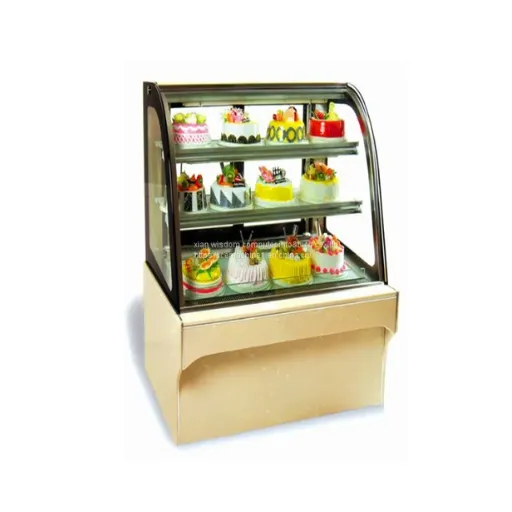
Technical specifications are only part of the decision. The commercial and support terms can affect the total cost and long-term usability of the cabinet.
Documentation, Warranty, and Service
Ask the supplier to confirm the documentation and support that apply to the specific model and order:
User manual and installation guide language and format.
Wiring diagrams and commissioning checklist.
Warranty period and what it covers.
Spare parts availability and lead time.
Recommended maintenance schedule.
Process for requesting service or technical support.
The company states that after-sales support is part of its customer service approach. Buyers should request written confirmation of the support information available for the selected model before ordering.
Destination-Market Requirements
If you are importing or distributing the cabinet, confirm that the product meets the requirements of the destination country. These may include electrical safety standards, energy efficiency labeling, refrigerant regulations, and food-contact material approvals. Refer to ASHRAE standards and guidelines and local regulators for the technical requirements that apply to your market.
Do not rely on a general export claim. Ask for the specific certificates or test reports that apply to the model under consideration. Also confirm that documentation is available in the language required by the local market or regulator.
Verification required: Confirm voltage, frequency, dimensions, refrigerant type, applicable standards, and warranty terms for the selected model before finalizing an order.
Mini-Story: When the Cheaper Quote Cost More
Tom, the facilities manager at a regional bakery, was asked to replace three aging reach-in cabinets. He received two quotations. The first was 15% lower and seemed to offer the same capacity and temperature range. He selected it and saved his company a noticeable sum on the purchase order.
Eighteen months later, the true cost became clear. The lower-priced cabinets used more energy under the bakery's warm ambient conditions, had no local spare parts stock, and required a service visit every few months. The maintenance logs showed that the total cost of ownership had already exceeded the higher-priced alternative. Tom's experience is a reminder that a refrigerated cabinet selection checklist should include operating cost, service access, and parts availability, not just the initial price.
Refrigerated Cabinet Selection Checklist Summary
Use the table below as a quick reference when preparing your enquiry. Confirm each item with the supplier for the exact model under consideration.
| Category | Item to Confirm | Why It Matters |
|---|---|---|
| Application | Product type and required temperature range | Determines whether the cabinet suits the stored goods. |
| Application | Daily throughput and peak load | Ensures capacity is matched to real use. |
| Application | Load-in temperature | Affects recovery time and energy use. |
| Site | Ambient temperature and humidity | Impacts cooling performance and component life. |
| Site | Floor load and delivery access | Prevents placement and installation problems. |
| Utilities | Voltage, frequency, and phase | Avoids electrical incompatibility on delivery. |
| Utilities | Ventilation and clearance requirements | Protects efficiency and reliability. |
| Utilities | Water and drainage needs, if applicable | Ensures correct plumbing for special features. |
| Model | External and internal dimensions | Confirms the unit fits the available space. |
| Model | Net and gross capacity | Avoids underestimating usable storage volume. |
| Model | Energy consumption at stated conditions | Helps estimate operating cost. |
| Model | Refrigerant type and compliance | Meets local environmental and safety rules. |
| Commercial | Warranty, manuals, and spare parts | Supports long-term operation. |
| Commercial | Destination-market certificates | Confirms regulatory acceptance. |
| Commercial | Lead time, shipping, and commissioning | Aligns the purchase with project schedules. |
A downloadable version of this checklist can be added to your equipment selection checklist resources once the file is approved.
Mini-Story: The Distributor Who Needed the Right Certificates
A European importer named Elena was evaluating two refrigerated cabinet suppliers for a supermarket chain. Both models met the stated temperature and capacity requirements. The price difference was small, so the decision came down to documentation.
One supplier provided a current CE declaration, energy label documentation, and a refrigerant compliance statement tied to the exact model. The other offered only a generic catalog and said the certificates would be "available later." Elena chose the supplier with current documentation. The cabinets cleared customs and passed the customer's technical review without delay. Her decision shows why documentation should be treated as a selection criterion, not an afterthought.
How to Use This Checklist in a Quotation Request
When you contact a supplier, include the completed checklist in your enquiry. A well-prepared request should cover:
The product you need to store and the required temperature range.
The maximum daily throughput and peak storage quantity.
The installation location, including ambient conditions and dimensions.
The available electrical supply and any utility connections.
The required clearance, ventilation, and access conditions.
The destination market and any standards or certificates needed.
Your preferred commercial terms, including warranty and support expectations.
A detailed request helps the supplier recommend the right model and provide an accurate quotation. It also reduces the back-and-forth that slows down procurement.
Discuss your application requirements with our team and request current refrigerated cabinet documentation for your project.
Common Mistakes to Avoid
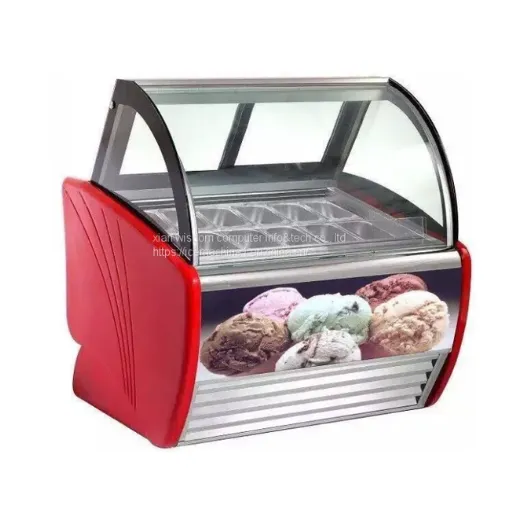
Even experienced buyers can miss details when procurement timelines are tight. Watch for these common mistakes:
Comparing gross capacity only: Always ask for usable capacity based on your shelf configuration.
Ignoring ambient conditions: A cabinet rated for 25 °C ambient may struggle in a 35 °C kitchen.
Assuming standard voltage: Verify voltage, frequency, and phase for every model.
Forgetting service access: Maintenance clearance is just as important as installation clearance.
Skipping documentation review: Request current datasheets, manuals, and certificates before ordering.
Basing the decision on price alone: Include energy, maintenance, and parts availability in the total cost.
Mini-Story: The Importance of Door Swing
James, an operations manager for a hotel kitchen, ordered two glass-door refrigerated cabinets for a narrow prep area. The units were the right size and temperature, but the standard door swing opened into the main walkway. Staff had to step back into the hot line every time they opened a door, which slowed service and increased the risk of collisions.
The supplier later confirmed that a reversible door option was available, but it had not been discussed during the initial enquiry. A simple note about door swing and workspace flow on the checklist would have caught the issue before delivery.
Conclusion: A Checklist Is Your Safest Specification Tool
Choosing a refrigerated cabinet starts with understanding the application, not just choosing a capacity. A complete refrigerated cabinet selection checklist helps you record the product requirements, site conditions, utilities, and documentation needs that determine whether a model will perform as expected.
Use the checklist to:
Define the storage temperature, capacity, and throughput your operation needs.
Record the electrical supply, ventilation, and clearance conditions of the site.
Compare model documentation on a like-for-like basis.
Confirm warranty, service, parts, and destination-market documentation before ordering.
Include operating cost and support availability in the total decision.
Before finalizing any order, confirm that the selected model's specifications, electrical parameters, dimensions, refrigerant type, and applicable documentation match your requirements and destination-market rules.
Request a quotation or product documentation for your refrigerated cabinet project, and share your application and site conditions so the recommended model can be checked against your checklist.
Recently Posted
-
Refrigerated cabinet power and temperature requirements: a buyer's checklist
August 8, 2026In March 2025, a buyer named Elena took delivery of three refrigerated cabinets for a grocery store her company was fitting out. T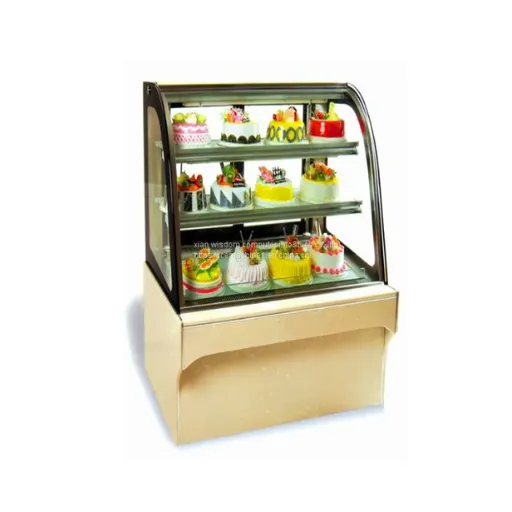 Read More
 -
What affects dehumidifier capacity? A buyer's guide to accurate sizing
August 8, 2026Last summer, a warehouse manager in Florida ordered a 50 L/day dehumidifier for a 2,000 m² storage area because the supplier's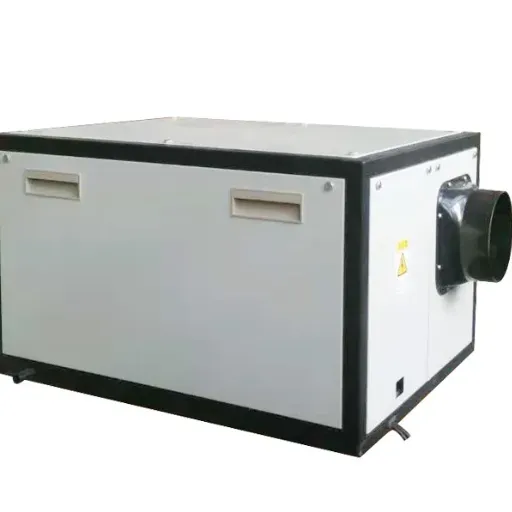 Read More
 -
Dehumidifier installation and drainage requirements: a buyer's guide
August 8, 2026In March 2024, a maintenance team at a seafood processing plant installed a commercial dehumidifier without checking the drain slo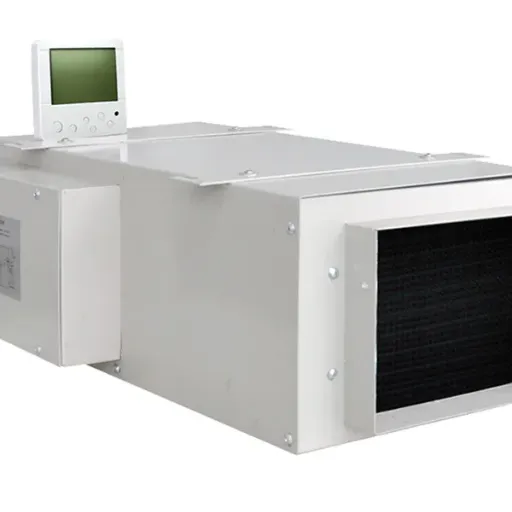 Read More
 -
How to choose an industrial dehumidifier for a facility
August 8, 2026A facility manager opens a storage bay and finds condensation running down a cold wall. Packaging feels damp, labels are curling,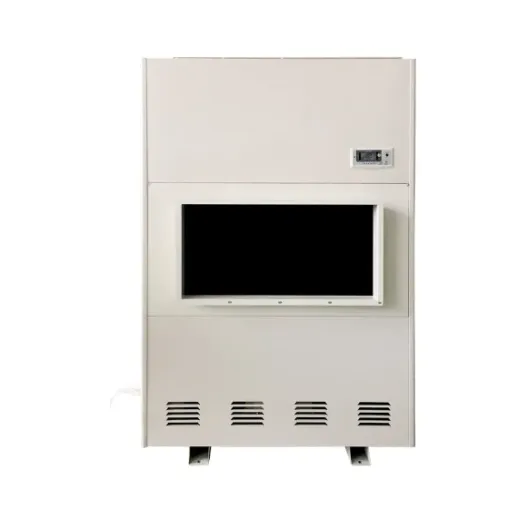 Read More

Contact Us
Recommended Products
-
 Large Capacity Ceiling Mounted Space Saving Indoor Pool DehumidifierNegotiableMOQ: 1 Piece
 -
Commercial Home Use Bathroom Dehumidification Swimming Pool Ceiling Mounted Mini DehumidifierNegotiableMOQ: 1 Piece
-
Greenhouse Grow Room Industrial Ceiling Mounted Duct Indoor Pool DehumidifierNegotiableMOQ: 1 Piece
-
Duokai OEM Indoor Dehumidifier Portable Swimming Pool Dehumidifier in Stock With CENegotiableMOQ: 1 Piece
-
High Quality Low Voltage ODM & OEM PLC Distribution CabinetNegotiableMOQ: 1 Set


-
Saladin Type Malt Production LineNegotiableMOQ: 1 Set
-
Seawater Desalination SystemUS$ 2000 - 1000000MOQ: 1 Set
-
High Speed Synthetic Lane Bowling Ball ReturnUS$ 50 - 2000MOQ: 10 Pieces
-
Reliable Automatic Six Axis Industrial Packing Robot With Self Diagnostic SystemNegotiableMOQ: 1 Piece
-
Multi-Travel Radius Six Axis Servo Robot for Custom Automation WorkstationNegotiableMOQ: 1 Piece


-
Labor Saving 6 Axis Industrial Robot Boost Workshop Production EfficiencyNegotiableMOQ: 1 Piece
-
Factory Direct Wholesale Carton Palletizer Packing Line Robot for MilkNegotiableMOQ: 1 Piece
-
Six-Axis Industrial Robotic Arm for Handling Welding Loading UnloadingNegotiableMOQ: 1 Piece
-
High-Automation High-Precision Six-Axis Metal Laser Industrial Welding RobotNegotiableMOQ: 1 Piece
-
Six-Axis Automatic Industrial Welding Robot Arm With Competitive PriceNegotiableMOQ: 1 Piece